Cashew grading often confuses buyers. You might have seen terms like W180, JH, LWP, or SWP on packaging. But what do they mean? This guide explains how cashews are classified based on shape, size, and quality.
1. What Does “W” Stand For?
“W” means White Whole Cashew.
The number represents how many kernels are present per pound.
Whole Premium Cashews
- W180 — King-size, rare, large, highest premium
- W210 — Extra large, luxury quality
- W240 — Popular premium category
- W320 — Most commonly used whole cashew
- W400 — Smaller whole kernels, economical
2. What Are Standard Quality Whole Cashews?
These include varieties such as:
- A180, A210, A240, A320 — Whole cashews with slight color or shape variation
- R210, R320 — Slight reddish tint
- FW400 — White but lighter grade
- DW, B2, KW1, KW2, WOW — Mixed-quality whole kernels
These are great for cooking, sweets, bakery use, or bulk purchase.
3. Understanding Pieces Grades
Pieces are categorized based on size and shape.
Premium Pieces
- JH (Jumbo Halves) – Large, perfect for sweets
- JK (Jumbo Kaju)
- LWP (Large White Pieces)
- SWP (Small White Pieces)
- SSP (Super Small Pieces)
- BB (Baby Bits) – Used in bakery, sauces
Super Pieces
- JH1, JK1, LWP1 – Slight color variation
- SWP1, SSP1, BB1 – Budget-friendly pieces
- DP, DS – Broken or split kernels
4. Factors Used to Grade Cashews
- Size
- Shape (whole/halves/pieces)
- Color (white, ivory, light brown, reddish)
- Texture
- Moisture level
Conclusion
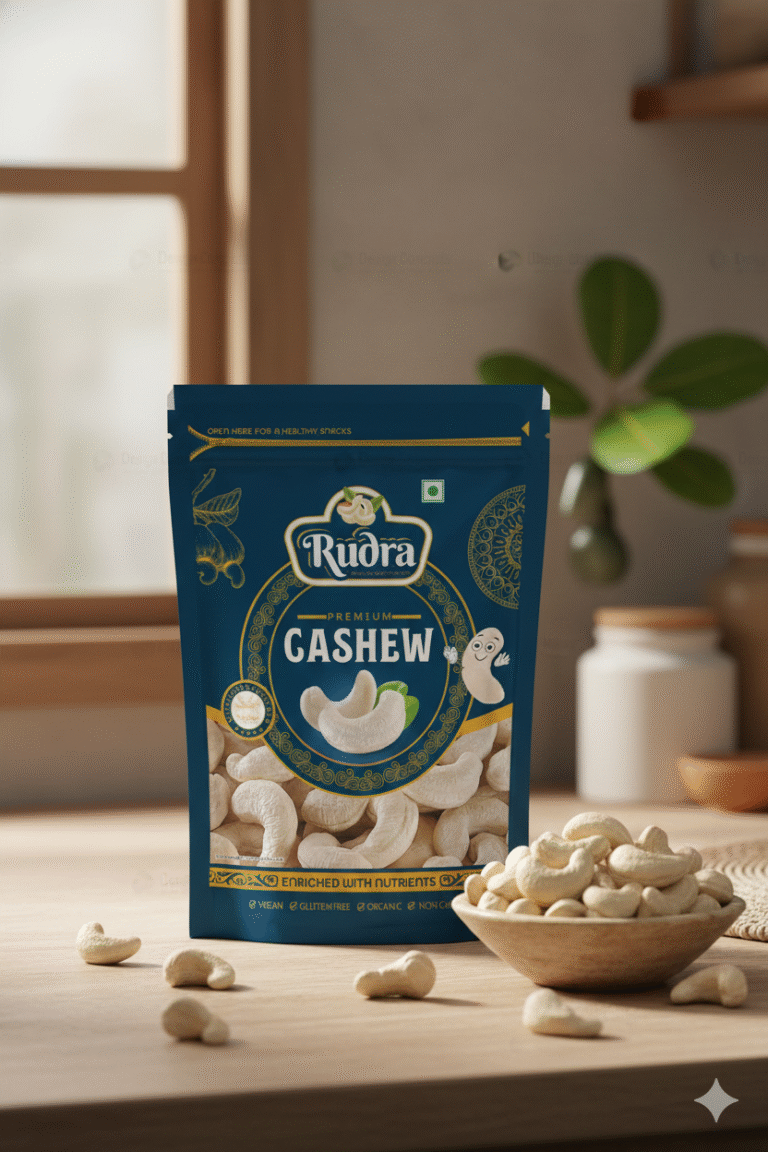
Grading helps buyers choose cashews based on use — premium for gifting and snacking, pieces for cooking or industry needs. Rudra Cashew follows strict grading standards to offer variety with authenticity.